Demo Site
Showing posts with label reconnect. Show all posts

Monday, June 21, 2010

twenty-three- Father's day


For my Dad, Stepdad, and most importantly my Grandfather.  Happy Father's Day!  To quote my Grandfather, "Every day is Father's Day." 

I woke up to the sound of a dog barking.  Loud annoying barking that wouldn’t quit.  Actually it was a car horn.  Frank’s car horn.  Loud annoying honking that he wouldn’t quit.  But I must have woken up psychic this morning because when I looked out my window, I saw Frank sitting in Sally with the top down.
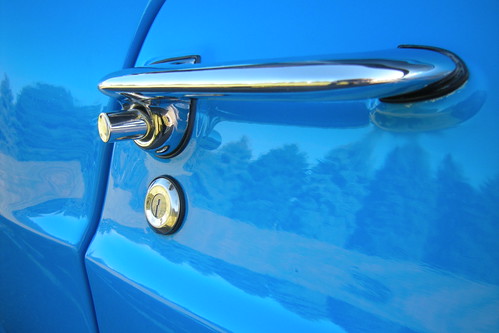
 

“What the hell is he doing in my car?!”  That was the first thing that came to mind.  It was also the first thing out of my mouth, this lovely morning.  Sarcasm.
But then I remembered that he borrowed it for a few days.  It was early.  Though, seeing Sally again, “usurped” is the word I’d rather use.  To his credit, Sally looked like she just took a bath in a fountain of youth.  Armor All-ed and sparkling blue.  But the stereo was blaring jazz music.  Blaring horns that Frank was honking along to.  There was also something hanging from my mirror.  I prayed that it wasn’t a rosary.  He mentioned finding god in his letter.  Please god, do not bless this car!
Then there was the round yellow-topped canister in my cup holder.  Lemon air freshener.  The man is dead to me.
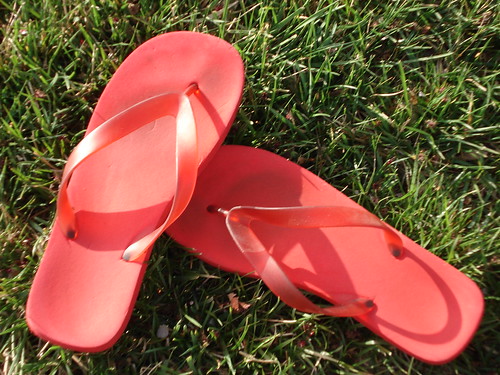
Then the psychic thing hit me.  In the back seat was this hairy thing that I thought was a coat at first.  Frank’s new fashion overhaul infecting my car.  But then I saw that he was wearing jeans.  And the same flippy floppies on his feet, shielding my clutch and brake pedals from his oily can-tan residue, that he wore the last time we went out to dinner.  And a t-shirt with writing across the chest.
Now, I don’t have anything against old people trying to look young.  By all means.  And Frank isn’t that old.  Just old enough for a half-life upheaval.  I just think there’s a way to do it appropriately.  Lloyd Center Frank?  He was a disaster.  His leathery hide Saran wrapped in oversea fabric that, honestly?, looks skeevy on guys my age.  But this Frank?  While he still looks ridiculous, he does look more organic.  I like this Frank.  I can tell people this Frank is my dad.
Anyway, the thing in my back seat?  It started moving around.  Not a coat.  It was a dog!  Lean and white and spotted all over.  I loved him at first sight.  Well I didn’t know it was a him, but he looked like a him.  He just looked like a man.  Because he was rolling around the back of Sally like there was a fire in his ass.  Like I said.  He looked like a man.

I put on a pair of holey jeans.  Holey not holy.  Though they weren’t unholy either.  Can you smell a little lack of faith in my perfume?  Actually it’s not that I don’t believe.  I just need more proof.  And I have faith.  I had a lot when I was younger.  One less abortion younger.  But faith isn’t bottomless.  You have to conserve.  Ration.  I’m around half-tank now.  And with a boyfriend who’s openly cheating on me, my job, which I’m trying not to hate, my ex-prodigal father back in my vida “je ne sais quoi”, and then there’s Nick.  And… Chloe. 
I just need to ration my faith carefully until I have more proof that the big guy up there is—well, actually is.  Do you believe in god?  That’s not a fair question.  Let me get back to getting dressed.

I slipped on a shirt with writing across the chest.  This red ropey (RED) bracelet from years ago.  And flippy floppies!  It’s Father’s Day.  Good enough excuse to match.  I looked out the window to see what kind of sunglasses he was wearing.  Aviators.  The psychic thing hit me again.  Last night before I went to bed, I put my aviators on top of my sketchbook so I wouldn’t forget them today.  Spooky, huh?  I put them on, grabbed my sketchbook then headed out.

When I got out to the car, Frank was out on the sidewalk with the beast.  Actually, he was really gentle and well trained.  The dog.  I guess he just had to pee.  Fortunately, Frank let him out of Sally before he was rolling around the back seat in his piss.  On Sally’s leather interior.
“Who’s?”
“Mine!  Well, ours really.  A present for myself and my daughter on my day!”
“This isn’t just your day, dad.”
“Oh, well I forgot to invite any other dads to our party so—it’s my day.”  Frank gave me a look over his Aviators.  It said, ‘let me win this one, or I’ll spank you over my knee, old school.”  I dropped it.

“Who?”  He may have been gone a long time.  But we can still understand each other’s languages.  Family.  You can’t forget them.
“No name yet.  You’re gonna have to help me.”
“Dalmatian.”
“Yes mam!  I had a Dalmatian growing up.  Gorgeous.  We fed him too much though.  He got fat.”  Frank made a sour face.  He never told me he had a dog growing up.
“You never told me you had a dog growing up.”
“I know.  That’s the point of today.  I’m gonna tell you everything.  We have just under 16 hours so...”
“Please.”
“I’m just kidding you, princess.  We have years and years and years for that.  So starting today I’m gonna read to you from my childhood diary, a day for each day.  Did I tell you I used to write?  Novels!”
“Frank!”
“Ok, Ok.  Easy there!”  He laughed.  Naturally.  This was not Lloyd Center Frank.  Thank god.  Or thank the gods.
“So where to, dad?”  I said all excited.  I really was excited too.
“Coffee.  Then everywhere!”
“Coffee then everywhere!”  Aside from the jazz and the car horn, this was a great way to wake up.
We piled into Sally, I took the wheel, and were in fifth gear in no time.

I started doodling that morning, between the Thursday Tattoo and lunch in Chinatown.  I haven’t drawn anything since the abortion.  Writer’s block doesn’t happen when you have nothing.  Really, you have too much and it all gets crammed.  Bottlenecked.  You have to just pick something and pull it out to get things flowing again.  You have to pull your finger out of the dam.
That morning, things were brimming.  Heavy.  Bloated.  So I pulled my finger out and wrapped it around a pencil.  I doodled a bit.  Roses in the margins of my planner.  Roses all around Nick’s planner.  Just to get the feeling back.
Then the sketchbook.  I didn’t know where to start, so I started where I left off.  I tore a page out a long time ago.  I still remember what was on it.  That’s where I started.
Actually, I tried some still-life first.  Apples in a bowl variety.  It was awful.  The drawings came out Ok, but it was so passionless.  I tore out a lot of pages.
Then I went back to that day.  What was on the page I tore out.  I drew that moment.  Me ripping out the page.  It was a little weird.  I haven’t drawn anybody in a long time and I kept having to look in the mirror and subtracting a few years.  But in the end, it got me started again.

We went into this coffee shop downtown and it had a little too much character for my taste.  So we walked over to the Seattle’s Best Coffee inside the Borders on Yamhill instead.  Seattle’s Best Coffee beats Starbucks any day.  Plus, Frank wanted to buy a couple books about Dalmatians.
We piled up a stack of books and sat down with our coffees.
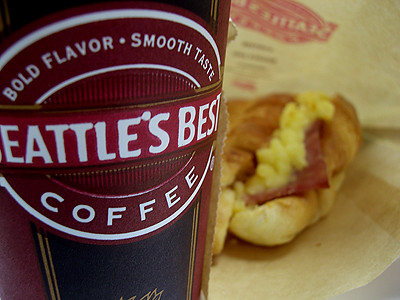
“What’s that?”  I noticed one of the books didn’t have a dog on the cover.
“Hotel on the Corner of Bitter and Sweet.  Recommended to me.”  He lifted up the book to me.  It looked like a love story.  It sounded like one.  It was.  There were two people standing by the water.  You couldn’t see them because they had umbrellas over their shoulders covering their top halves.  But you can tell one was a man and the other was a woman by the designs on the umbrellas.  Plus, the font screamed love story.
“What’s that?”  I was about to ask Frank about the book—the recommender, but he’s a quick one.  He was looking at my sketchbook.  He knew what it was.
“I started again.”  I opened it and went through the pages.  Everything after the first one—the one of that day.  Frank looked happier and happier after each page.
“I’m glad.”  He said after the last drawing.  I closed the book immediately.

I’m glad?!  Well that’s a fucking relief!  PHEW!  The man—one of the men—responsible for me putting the pencil away in the first place, is GLAD that I’ve picked it up again!  Years later!
I wanted to whack him on the side of the head with the sketchbook, but… it is his day.  Besides, if I knocked him out, he wouldn’t have been able to answer my question.

“Dad?”
“Yes, hunny bunny?”
“Ugh.  Dad?”  Almost whacked him that time.
“Yes, Audrey?”  He was giggling.  Oh my dad…
“Are you pregnant, dad?”  Now he was laughing.  Naturally.  But too loud.
“Three pee-sticks say I am!  You’re finally gonna get that baby brother or sister you always wanted!”  Really, too loud.
“Shh!”
“Oh, princess.  No, I’m not pregnant.  I know this is your way of asking me if I dating again and yes, I’m seeing someone.  She’s not pregnant either.  I don’t think so.  Not yet.”  He brought his volume back down to Seattle’s Best Coffee inside a Border’s appropriate.  But, wow!  My dad just told me he’d been having sex.  And that he’s going to continue to have sex!  This day just took a turn on Plot-twist Boulevard, straight down Too much information about your dad’s sex life Alley.  Actually it’s a T-junction.  Because any info about that is too much.  Turn right or left.  Drive fast and far away!

“You want babies with her?”  I was breaking my own volume rule.
“I don’t know.  It was a joke.  But I do like her a lot.”
“Who?”
“No one you know.”  He crossed his arms.  Why do guys always do that when they get defensive?  It’s not tactically intelligent.  Their arms are tangled in each other.  Defenseless.  It makes it that much easier.
“How long?”
“A few months.”  And we were right back on Plot-twist Boulevard!

“Oh, so that’s why you came back to Portland!  She lives here and you thought you could kill two birds in the same bush!”
“I don’t think you used that right—”
“I don’t think I heard you right, just now.”
“Ok, sorry.  But you’re wrong.  With the expression and with the first thing.”
“You need to prove me wrong then.”  The Aviators were off.  I gripped my sketchbook, ready to whack.
“She’s my lawyer.  Was my lawyer.  I fired her a few months ago.  Anyway, when I moved back here, I brought her with me.  So you’re wrong.  This isn’t about killing two birds with one stone.  Just you.  Just the one stone in here.”  He rubbed his chest.

It was sweet.  Not the killing me with one stone.  But the fact that there was only me.  And only one stone.  I let go of the book.  He escaped another whacking.

“Do you love her?”
“If that’s you’re way of apologizing then yes, I forgive you.  But you gotta have more faith in me, princess.”  Break out the rations.
“I do—now I do.  And I am.  Just no more talk about your sex life.”
“Ok.  Yes.”
“Yes?”
“I love her.”  Right then I wondered about the stone.  How big it is.  Is there room for both of us to stand on?  That’s also when Frank took my psychic power away.
“I love you more, princess.  You got the whole thing.  But I’m old and lonely.  Do you mind sharing?”  Oh my dad…
“Only if you say it again.”

“I love you more.”

“Sharing is caring...”

“You used that one right!”  A natural laugh.
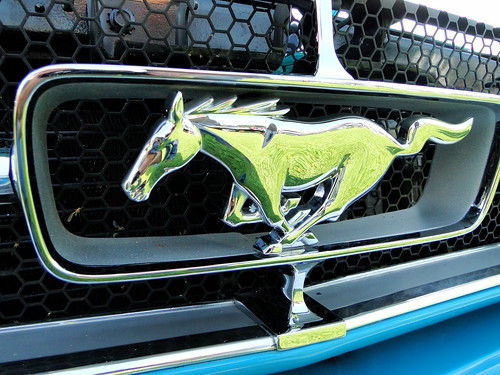
We got back to Sally, back to the dog, and sat on her hood wondering what to do next.
“Spots!”  I was kidding.
“You’re kidding.”  I was.  He didn’t laugh.
“Lucky?”
“Too common.”
“Rocky?”
“Too punchy.”  He laughed at his own bad joke.  I laughed a little too.  A little.
“Stripes?”
“Too funny.  How about Principessa Esmerelda?”  He remembered!  Almost.
“Dad, he’s a boy!”
“Really?  Oh that’s why you said Rocky…”  He was kidding.  I didn’t laugh.
“How do you know, dad?”
“Well you gotta look at the undercarriage.  See if there’s anything hanging.”  I gave him a look over my Aviators.

“No, I mean your lawyer.”
“Oh.  You gotta be more direct, princess.  My Audrey-ish is still pretty rusty.”
“Sorry.  But how do you know?”
“Honestly,” he sighed with his breath, “I don’t think I can give you a useful answer.  You just feel it one day.  Or maybe over a couple of days.  Like a cold.  You feel it coming on and getting stronger.  Then one day you’ve had it for a while and you don’t remember what it’s like not to have a cold.  You sound different.  Smell things different.  Breathe different.  Even your body isn’t the same anymore.  It’s like that, except it’s much nicer than a cold.”  He leaned over and kissed the top of my head.  Oh Dad…
“That was pretty useful, Dad.  You should have more faith in yourself.”
“Thanks, Audrey.”

“Doesn’t he have a name?”
“He’s had a bunch of names.  He’s bounced around a lot, I think.  He deserves a permanent home with a permanent moniker.  Don’t you, buddy?”  I think the dog understood us because it rested it’s head on Dad’s knees and waited to be pet.
“How about Frankie?”  As soon as I said it, Dad’s lips flattened out and his face looked like it folded into itself.
“That’s my name!  You’d get confused.”
“No.  He’s Frankie.  You’re Dad.”  I think I saw the stone melt.  Because his face melted back to its original form and his shoulders relaxed into spaghetti.  He smiled.  Not a Lloyd Center smile.  A dad smile.
“Frankie it is!”

We ended up at Waterfront Park.  Me and my two Frankies.  We found a spot under a tree and sat down while Frankie ran around fetching sticks Dad threw out across the grass.  I opened up my book and sketched while we talked.

“What’s her name?”  I realized it was overdue.  I’m a quick study.
“Eliza.  Liza.”  He said it with a half-smile.  Mushy.
“Pretty?”
“Pretty pretty.  Beautiful.  And only a few years younger than me.”  He seemed proud of that.
“So you’re not completely mid-life crisis.”
“Nope.  But I have been eyeing this yellow Camaro at the Chevy dealer near the house in Beaverton.”  He moved back in?
“You moved back in?”
“Yeah.  It’s my house.  Your house.  And the apartment wasn’t big enough for both our wardrobes.  Liza has a million bags.  Literally.”
“I like her.  Maybe I can come over and borrow?”
“Hah.  Doubt that!  Nah, she’s pretty down to earth.”
“And you love her.”  He didn’t reply.  Just a half-smiley nod.

“So, yellow?”  Why do old guys like such bright colored cars?  And yellow seems to be the craze.
“Yellow.”
“Convertible?”
“Nope.”
“So you’re not completely mid-life crisis.”  Relief.  Really, if he were he’d be driving a sports car right out of the showroom with the top down so he could show off his model skinny model pretty girlfriend who’s about my age and probably went to the same college.
“No, princess.  I think I’ve actually grown up a bit.  How about you?  How’s quarter-life?”  Here we go.  I put down the sketchbook.

“My boyfriend is cheating on me with his two secretaries, one of them is married.  My best friend is in love with me even though he has a girlfriend who happens to be Portland’s morning Weatherbabe.  And also, I’m cheating on my boyfriend with said Weatherbabe.”
“Crisis!”  He laughed.
“Crisis.”

“You want a Camaro?”
“No thanks, Dad.”
“Just tell me if you do.”  This was nice.  This was natural.  My dad was my dad.  Finally.

“So, any comments?  Any parental concern?”  Anything you want to say about the Weatherbabe?
“Oh, I’m always worried about you, princess.”
“I know.  But, I just thought that maybe you’d say something about—”
“The girl?”
“The girl.”
“What is there to say?  You either are or you’re experimenting.  Or you’re in-between like Liza’s younger brother.  He gets a lot of action!  I mean anyone would when their market is the whole market.”
“Dad.”
“What I’m trying to say is.  You could be a hippie and I’d still love you.”  Wow.
“Because I’m your daughter?”
“Oh, that’s just a coincidence.  I fell in love with you the first time I saw you.  And that was such a crazy time and people were running around.  Your mother was screaming and calling me every foul name under the sun.  Seeing you, it was like we were in a bubble.  Just me and this tiny girl that I loved so much.  Instantly.  It took a minute to realize I just became a father.”  Again.  Wow…

I wanted to ask him all those things that people ask in movies.  Where were you all this time?  Why didn’t you say theses things to me when I was younger?  Where was my dad when I needed him?  And that day…
But this was still his day.  And we have years and years for all that.

“How do you do it dad?  How do you make your relationships work?”
He gave me a confused look then laughed like he just heard a bad joke.
“Really!  I mean mom died when I was born but from what you’ve told me you guys had a wonderful marriage.  And I can only assume that you and Liza are going great too.  Me on the other hand.  Crisis!”
“You’re young, princess.  Don’t worry.”  Does every parent say this?  Is it in their handbook?  Their Child Manual?
“You were young with mom too!”
“Yeah, but it was hard.  It’s always hard.  We loved each other.  But she was a little off.”  What?
“What?”
“She was pretty broken up when I met her.  She never really healed.  All the way up to her death.  But we loved each other.  It’s just, there’s more to it than that.”  I felt a song coming on.  I was right.

“Sometimes love just ain’t enough.”  He recited proudly.
“That’s a song.”
“Yes mam.”
“A sappy love song from a sappy love movie.”
“I think you’re right.”
“You only listen to jazz.  The loud horny jazz.”
“Um, there are horns, yes.  But I’m a sucker for all those 80’s and 90’s ballads.”  What?
“What?”
“Yeah.  And that song is one of my favorites.  Patty Smyth and Don Henley!  C’mon!”
“How is this song an answer though?  This isn’t a movie.”  This isn’t.
“Oh, princess.  Where do you think these stories come from?  These songs?”
“Clichés.”
“Clichés, yes, but there’s a reason why clichés are undying.  Why they outlast everything.  Think about it.”  Hmm.
“Listen, princess.”  And then he sang to me.

“There’s a danger in loving somebody too much.  And it’s sad when you know it’s your heart you can’t trust.  There’s a reason why people don’t stay who they are.  Because sometimes love just ain’t enough…”  He was pretty good too.  I clapped.  Really.

“Do you love him?”  Henry.
“Yes.  But he’s cheating.  And I’m cheating.  And I love Nick too.”
“Right.  But if you just heard me.  Love ain’t enough.  There’s more.  Trust, Faith, Loyalty, Caring.”
“But that’s all part of love, isn’t it?”  Isn’t it?
“Absolutely not.  Love is love.  It’s on that list.”
“But then what is it?”
“Where?”
“What?”
Where is it?  That’s the real question.  Everyone knows what it is.  You know.  The cold, remember?  People get confused and that’s when they lose it.  They can’t find it.  The question, princess, is where?”  He was sounding cocky, like a professor.  I was walking into a trap; a dad lecture.
“Where is it?”  Here we go.

“Look down.”  I looked down.
“If your jeans are north and your chin is south and your belly button is where we stand.  It’s South by SouthWest.”  Where my heart is.  Oh my dad…
“It’s in my heart?  Thanks, Dad!  I understand now!”  Sarcasm.  But he laughed anyway.
“It’s a mnemonic, Audrey.  A memory trick.  S.  S.  W.”  Thanks, Professor Carlisle.
“And they stand for?”
“How to find love.  How to keep it.”
“This sounds interesting.”  Really.

“Work.  It takes a lot of work.  That list?  That’s all work.  It doesn’t come automatic with it.  You gotta work on those.  You gotta develop them and grow them like plants.  Just because you love someone, doesn’t mean you trust them.  And you don’t trust them because you love them.  They have to earn it and you likewise.  Same goes for the rest of the list.”  Who knew dads could be dads?
“This is making sense.  It’s scary.  What’s next?”

“Schedule.”
“Schedule.”  And he lost me.
“When you’re with someone, you end up trading a lot of things for them.”
“Time.”
“Yeah.  The life you had before them, friends, school, work, hobbies, they all become what you do when you’re not with them.  And all you want to do is be with them.  So?”
“You don’t do them anymore.”
“Or they don’t make you happy like they used to.  Before you fell in love.  The problem is that you miss those things after a while.  When things settle down and you can start thinking clearly again.  When you get used to having that cold.”
“I see.”  Really.
“You gotta schedule those things in at the start.  Before you can miss them.  Keep them in your life so they don’t fall out of it.  Because some things don’t come back.  And you don’t wanna have nothing to turn to when you find out that you need more than just the one person.”
“Hard work.”
“Exactly.”  Exactly.

“I never knew.”
“You did.  Everyone does.  They just forget.  The cold gives them headaches, makes them woozy.”
“I mean I never knew this was all inside you.”  I pointed to the stone.
“We have years and years for all that, princess.”
“We do.”

“What’s the last S for?”  He smiled.
”This is the easiest one.  And the one people forget first.”  He waited for me to answer.
“Survival?”
“Go on.”  It was my turn to be the professor.
“Love is about surviving.  The fights are normal.  That’s how you know you still care.  You know you stand a chance with them when they’re still not going to put up with your shit.”  It’s true!
“And?”
“And you have to remember that you survive these fights.  You both do.  Together.  And in the end, with some faith, you’ll survive everything.”  Mushy.  But I was still proud of myself.
“That’s bullshit.”  And then I wasn’t so proud of myself.
 “Ok then.  What does the S stand for?”

“Sweetness.”  Sweetness.  How could I forget?
“Sweetness?!  Are you kidding me?!”
“Nope.  Honest.  Sweetness.  It’s gasoline.  It’s diesel.  It’ll keep you cruising all the way to the coast.  And when you’re running on empty?  Sweetness is the backup generator.  It’ll keep the AC on at night.  The fridge running.  Sweetness.  Simple.  Easy to forget.”
“…”
“You know I’m right.”
“…”
“A little peck on your cheek.  Three little words.  A nice compliment.  How was your day?”
“Yeah.”
“It keeps you cruising.”
“It keeps you cruising.”  Oh, Dad, you are right…

“Just remember that, when you think you’ve lost something you’re scared you won’t find again.”  He kissed the top of my head again.
“South by SouthWest.”
“Exactly.”  Exactly.

“So what were you drawing before we got all philosophical?”  He pointed to the closed sketchbook on the grass beside me.  I opened it up and showed him.  Grass, trees, the river, a cherry tree.
“That’s here!”
Pioneer Square.”
“Huh?”
“Yeah, it’s here.  Waterfront Park.”
“Is that you?  That little girl with the apple?”
“It’s a little girl with an apple.”  Me.
“That’s a giant chicken!”  The man from Pioneer Square that day.
“Yep.”
“You’re really good, princess.  Always were.”
“Aw, Thanks Dad.”  Really.

“How about we take Frankie to the Market?”
“Only if it can be our thing.  Me, you and Frankie.  We don’t have to do it weekly, but I just—”
“Of course.  Our thing.  Me, Frankie, and Princess Audrey.”  A natural Dad Frank smile.  From my father.  On my father’s day.


“Sounds like a wonderful day!”
“It was.  Hey, I need to go.  I’m in front of Henry’s now.”
“Ok.  I’ll see you tomorrow night?”
“Yes, mam.  Tomorrow night.”
“Nick will be over too.  Is that Ok?”
“That’s Ok.”
”Think you’re ready?”
“I think so.”
“Ok.  Goodnight, Audrey.”
“Goodnight, Chloe.” 

Audrey hits the red button and pockets her phone.  With her key, she opens Henry’s door.  Henry gets up from the sofa in the living room and meets her in the hallway.

“Hey.”
“Hey.”  A half-hug.  A short kiss.
“I missed you.”
“I missed you too.  I think I’m going straight to bed.  Long day with Dad.”
“Ok.”

She drops her bag next to the stairs and kicks her flip-flops to the side of them so she can find them easy the next morning.  Then she remembers.
“Well, are you coming, handsome?”  South by SouthWest.
Henry’s grin could easily be mistaken for a warm smile.  He grabs his girlfriend by her waist.
“Why don’t you take a nice long shower, while I lay down some fresh sheets.”  He holds her full.  A longer kiss.
“Ok.  Fresh sheets sound great.”  Sweetness.

Halfway up the stairs, Henry calls to her.  She turns around.
“Did you have a good day?”  He asks from the bottom step.
“I did.  But it was Frank’s.”
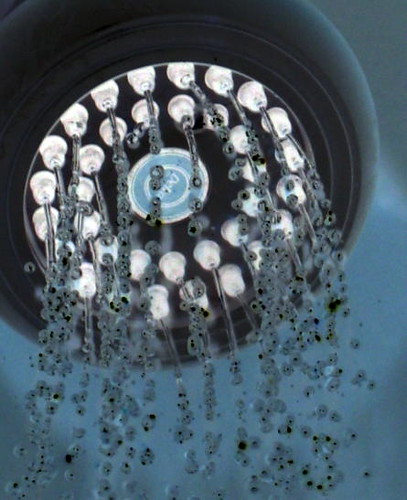
 
In the shower, the water falls like hot summer rain.  Audrey stands directly under the showerhead.  The round wash all around her.
She thinks about the drawing.  Pioneer Square.  Mr. Chicken.  The unknown man inside the suit.  The face she couldn’t see.  The one that saw hers wet with hot summer rain.
She wonders how she got here from there.  To this shower.  Her own suit.  She wonders who he is, what he looks like. 
How lucky he was to have his face hidden, when hers was public in that crowded square.  As lucky as she feels now, her face private in Henry’s shower.  The water raining on her face, mixing with her tears.  No one can see that she’s crying.


photo1:http://farm3.static.flickr.com/2524/4104814045_0e5fe96002.jpg
photo2:http://farm1.static.flickr.com/1/478450_3dd422a5d1.jpg
photo3:http://farm3.static.flickr.com/2439/3826957587_254c7a6e94.jpg
photo4:http://farm1.static.flickr.com/69/170539636_4830b10d5c.jpg
photo5:http://farm3.static.flickr.com/2399/2434506193_de6f68119b.jpg
photo6:http://farm1.static.flickr.com/3/4759528_6eb1d0a14f.jpg

Monday, June 7, 2010

eighteen- Saturday Market

Nick steps off the Max and puts his Baloramas on under the shade of the overpass.  The sun is out full and across the street from him the Saturday Market is packed with people.

Portland’s Saturday Market, located in a lot by Burnside Bridge off the Naito Parkway, was founded in 1974 and modeled after the Market in Eugene.  It’s a weekly affair, open from the end of winter to the start of the next one.  Against the hint of its name, it’s also open on Sundays, when it’s still called the Saturday Market.  This Sunday, unlike other Sundays he’s frequented, Nick wonders that aspect of the Market; how it can be two things in one and no one is suspicious.  He wonders if anyone else thinks that it should be called the Sunday Market instead.  But people accept what they’re told.  Rarely do they ask questions or prod enough to force a change.  It is what it’s called, no matter what day it’s held.  ‘But is it the resoluteness of the Market to stick to one name?’ he thinks.  ‘Or the lazy acceptance of the people who call it that one name?’  These questions, he decides, are better left alone, along with the rest of life’s unsolved mysteries.

He looks at his watch.  He’s early.  He has time to walk around the labyrinth of vendors but he knows he isn’t in a haggling mood.  He scans the lot and gets dizzy seeing so many people walking and running around.  He closes his eyes behind the large black shades and listens for direction.

His ears lead him past the merchants, past the food carts, and to a large tent crowded with white plastic chairs and round wooden tables, each with an empty hole at its center.  At the back of the tent is a low stage crowded with musicians, instruments, and sound equipment.  A band.  His ears have led him to the music.
The band is pretty good and they’re playing Country: Randy Travis.  Nick listens to everything, but Country is one of his favorites.  They’re playing “Diggin’ up Bones”, one of Nick’s favorites from Randy Travis.  He hates waiting for people, but this isn’t too bad anymore.
He sits down on one of the chairs, finding the one out of every dozen that’s still mostly white, and as soon as he finds his place he sings along.  “Diggin’ up bones, I’m diggin’ up bones.  Exhumin’ things that’s better left alone.  I’m resurrectin’ mem’rees of a love that’s come’n gone.  Yeah I’m jus sittin alone, diggin’ up bones…”


Waterfront Park- nine years old

On Saturdays, Nick went to the waterfront with his mom holding her books in one hand and Nick’s small hand in the other.  They’d find a spot near a cherry tree and then let go of each other, leave each other to their hobbies. 
His mom read a lot of novels, usually finishing two each weekend.  On this Saturday, she was in between The Missing Piece by Shel Silverstein and The Sound of Waves by Yukio Mishima.  She was an intelligent woman, but a soft touch.  She was addicted to love stories, especially the tragic ones.

When he was still of appropriate age, she would read him to sleep.  And he would fall asleep easier when she did.  It wasn’t boredom or the fact that his brain wasn’t developed enough to understand most of what she read aloud in her mostly monotone recitation; it was like she was reading poetry, stopping at the end of each line, even the ones without periods or commas.  It wasn’t any of that.  He felt at peace just to hear his mother speaking for a long time, and not to him or anyone else.  Her odd lullaby, spoken in a low volume that crept around the room.  It was soothing like white noise, calming like a Senator’s speech—the sound of it, not the content.
The last book she read to him was Love in the Time of Cholera.  She had been reading it to him for days, an hour’s worth of pacifying pages each night.  He was starting to sleep when he heard her voice stray from the usual singular tone.  It cracked a bit.  The once meaningless words stuttered and dripped.  Her song interrupted by new notes.  She cried as she read on.
He didn’t understand.  He probably would have if he had ever listened actively.  But boys are born one of two types: those that fall asleep to bedtime stories and those that fall asleep to lullabies. 
Bedtime story boys grow up loving knowledge; the “power” of it.  They’re the truth seekers.  They collect the hard evidence of life and store them away like riches or weapons.  There’s nothing they can’t explain or figure out.  What they can’t, they destroy.  These are the men who own, who rule.
Lullaby-ers are doomed from the start.  They’re vulnerable to music, the sound of it and the irrationality of it.  They live in the “powerlessness” of it.  They grow up looking for the song in everything.  They accept the elusiveness of things unexplainable.  Life is but a note following a note, following a note, following a note.  It’s up to you how the note’s played and on what instrument.  And like all songs, there are a million ways to get to the end: a flourish, a fade, or a halt unexpected.  Play as you please.  Sing as you care to.  Because after you hit the last note—silence.
Nick—an adult audiophile with libraries of CDs, tapes, and records—was of the latter.  And though she was a mother he thought himself lucky to have, she didn’t sing.  Because she couldn’t.  So even as a boy, he made music out of what he was given.  Music that he didn’t understand yet, but desired the way his friends desired BB guns and Transformers—their mothers must have read them bedtime stories.

He didn’t fall asleep that night.  The next evening he simply told his mom that she didn’t need to tuck him in anymore.  She didn’t seem surprised.  She didn’t ask why.  She did what most good mothers would have done.  She kissed her little boy’s cheek.  She understood.

Years later, they started going to the waterfront on Saturdays and she read to herself while Nick set off in search of music in the park.  Sometimes he’d find it literally, in the form of outdoor concerts or starving open-case street performers.  Most of the time he ran around the grass, staying in his mother’s sight, and listened to the nature pinned between Downtown and the Willamette River
While his friends were home watching the weekly aired cartoon marathon, he was out here finding the lullaby he thought he’d lost that sleepless night his mother cried.  He searched for it every Saturday and found other things instead.  He found the river and its loud echo.  He found the rhythm of grass.  He found the secrets whispered among the leaves.  And the trees’ long silence made him jump every time they snapped and crackled, as if they had just said something important and he had missed it.
It was here that he found her, one crowded Saturday morning.  It was here that he lost her just weeks later.  He didn’t know or understand till he was a few years older that he not only discovered his first love, one Saturday morning under a cherry tree, but that he also found the long-lost lullaby.


Pioneer Square- August 30th, 2004

It was hot, oppressively so.  Nick was drenched in sweat.  He smelled awful.  He was miserable. 
It was his first day at a new job; the fourth in two weeks.  He wasn’t a bad employee.  He just didn’t like the other jobs.  Because they were shit jobs.  But this one was different.  All he had to do was stand in the middle of Pioneer Square in the blazing Portland sun and hand out fliers for a fast-food chicken “restaurant” chain.  It was different from the other jobs.  It was shittier.

Nick knew his way with a paintbrush and a canvas.  His hands felt right around a pencil on paper.  At home, he had piles of sketchbooks and stacks of drawings.  He even had a few finished paintings.  He knew he was good, but doubted he could make money.
That’s why Nick wasn’t majoring in anything “art” at Portland State.  He chose a major more profitable, more secure.  He didn’t mind.  He resolved after high school to never quit drawing.  He even, half-seriously, muddled over getting an Econ degree then starting his own business: a chain of tattoo shops.  It sounded like a dream. 
He had a few tattoos, two of them he did himself.  There was something unexplainable about the craft that he was drawn to, something excitingly elusive.  And there was the buzz of the needle; the soothing white noise.  But at this point in his life, standing in the middle of a sun-baked, tourist crammed Square, it was what it sounded like: a dream.

He hated every job he took as soon as he started them.  He worked as a bike messenger earlier in the summer and loved it, but he was only filling in for a guy who got injured crashing and then flipping over a parked police car.  Nick found out from the other messengers that he was a drunk.  He was a drunk but he had been with the company since its inception.  So when the guy was healed enough to get on a bike, not more than a month after the “accident”, Nick was given the “you’re a great guy.  If we ever need a fill-in or if a spot opens, we got your number!”
That was Nick’s summer.  Spent scrolling the newspapers, calling up the companies, then starting and quickly leaving shit jobs.  But he needed the money.  He was going to school on loans but still needed the cash for everything else: food, clothes, food, art supplies, food, entertainment, food…


Summer was almost over and he needed this job.  But it was miserable.  He’d been standing there for over two hours.  He was soaked.  He smelled awful.  And he had a headache from spinning around endlessly, handing fliers to people who were laughing at him.  They were all laughing at him.  That’s why it was easy to notice her.

She was staring at him, but she wasn’t laughing.  In fact, she was crying, wiping her tears away while she attacked her large sketchbook with a thick black pencil, her leaking eyes bobbing up and down, from him to the paper. 
She looked out of place, more so than he was.  One sad girl in a Square filled with happy people.  But that wasn’t why she stood out.  He recognized her right away.  He knew she was Audrey.

He walked up to her, abandoning his post carelessly.  He figured it didn’t matter if he stopped handing out fliers for a while.  The company gave him an outfit to wear and across his chest and back was the joint’s name in too flashy lettering. 
He was stunned.  He didn’t even know what was keeping his feet moving.  The rest of him had seized up when he saw her.
Equally surprising was her reaction to his approach.  Nothing.  She kept on sketching, her head bobbing in continuum.  She didn’t even speak when he stopped in front of her.  She just raised a wet eyebrow and began correcting a mistake she made in the drawing, a mistake she caught now that he was closer to her.

“Are you sketching me?”  He could’ve smacked himself.  She gave no reply just a nod followed by a sniffle and a hand wiping fresh tears.
“Why are you sketching me?” he tried again.
She looked up towards where his head was, her hand still moving on the paper in her lap.  Swift wet strokes.
“I wanted to draw something.  I don’t know why I came here.  All the tourists…  Anyway, you stood out.”
Nick was amazed.  She looked so heartbroken that it was making him hurt.  He looked down at the sketch.  It was good.  It was as good as his sketches.  But he already knew this.  He already knew her.
Still he was impressed.  ‘How can she separate her crying from her drawing?’ he thought.  ‘How can she be so distraught and so determined?’
“Are you ok?”  He asked, regretting as soon as he did.  He didn’t expect an answer.  She just sighed annoyed and kept drawing.
“Why are you crying?”
And at that, she stopped, resting the pencil between her palms, her held-together hands praying against her tear-tracked cheek.
“I’m crying because this is the last one I’ll ever do.”  She pointed down at the drawing with her eyes.
“Why?”  It was all he could think to ask.
She stood up, revealing a thick envelope where she was sitting.  They stood toe to toe.  Nick felt small; like he was a thousand feet away from her but she had zoomed in on him through binoculars.
“Because, Mr. Chicken, I’m off to kill myself.”
“Don’t do that!”  He spoke too loud and people around them looked, but he was genuinely shocked and worried that she might leave—and leave for good.
She laughed.  It was a wet nasally laugh; bittersweet. 
“Are you going to save me, Mr. Chicken?  Calm down.  I’m being tragically dramatic.”  She laughed again, this time not as loud or as long.  She picked up the envelope behind her and stuck it between the last pages of the sketchbook.  Then she tore the drawing out and handed it to Nick.
“I am dying today.  Just not as a whole.  But in pieces.  You can keep that one.”  She walked backwards away from him.
“My ex is a bastard and my father’s an asshole.  Men are cocks with no hearts or spines.”  She pointed to the piece of paper in Nick’s hands. 
“But you’re ok, Mr. Chicken…  It’s nice to meet a cock who cares.”  And she turned her back and left.

He wanted to follow her.  He screamed the words in his head.  “I know you!  I’ve known you for years!”  He was shaking.  It was hard to contain.
“I stole it!  The drawing!  I stole it!”  People around him stared scared at him yelling at her, now seated in a bus at the other end of the Square.
“You know me!  You know me!”  He felt her leaving.  He felt the invisible cord being pulled, stretched painfully.  He felt it tearing.  But he was smiling as he yelled, knowing she couldn’t hear him, wishing she could.
‘At this rate,’ he thought, ‘bumping into each other, randomly but so often.  It’s like I’m getting constantly raped by fate.  As soon as I start to forget you, coincidence catches me down an alley and mugs me for all I have.  At this rate,’ he thought, “I’m in love with you!”  He declared to everyone in the Square. 

A lot stared.  Some whispered to each other.  Some even clapped.  He didn’t notice any of them.  As soon as the bus drove away and he could no longer see her colorful silhouette, all he could do was drop his head and gaze down at the drawing; the piece she let him keep.  It was Nick, caught black and white, mid-spin.  In his feathery hands were fliers reaching out to the crowd around him.  The only cock who cared: Nick in a giant chicken suit.


Carlisle Manor- fourteen years old

During summer break from school, Nick worked for his uncle painting houses.  He had marveled at the size of the estate as they drove up through its gates.  But it wasn’t the first he’d seen and his wonder faded quickly into focus as he worked room to room on the expansive second floor.

A secret hobby of his, which his uncle was never to know about, was to wander into the rooms, the ones they weren’t hired to paint, and snoop around to see what kind of people lived there.
He was doing just that, having told the other guys that he was searching for the bathroom, when he stumbled into a wide open room that was decorated appropriately as a girl’s bedroom.
He scanned the items around him, noting the mix of childish effects and teen queen manifestations.  He imagined the girl who lived there, giving her a background story and outlining in his head her possible affectations.  He chuckled to himself as he walked from wall to wall, taking in everything he saw and adjusting his image of her.  This image was quickly shattered infinitely when he reached her desk and saw what hung on the wall above it.

There were two, among many, drawings tacked onto the wall.  One was a crayoned page of construction paper and the other was a framed and more sophisticated sketch.  They were vastly different; in skill as well as age.  The first was old, most likely drawn by her as a child.  The second seemed recent.  This he confirmed when he saw the pile of sketchbooks on the floor next to the desk.  He flipped through the top ones, which he found were not filled and that some pages were dated that same year.
There is no way to describe how a fourteen year old boy with an overgrown heart can feel at a moment so emotionally complex.  He felt like he had been molested by destiny, punched in the gut by fortune.
The drawings were different but they told the same story.  It was one he remembered—remembered living.  How could he forget?  It was his first love.


His mother had just cracked open the spine of Cold Mountain.  Next to her, waiting, was Cat’s Cradle.  No sooner had he ran away from her when he embarrassingly ran into a little girl, knocking her down and the toy out of her hand.
He dropped to his knees close to her and started telling her he was sorry and not to cry.  But she wasn’t crying.  She was giggling.
He helped her to her feet and they patted each other clean.  When they decided they were sufficiently dirt-free, the little girl picked up her toy horse and continued to gallop it through the grass around her.
“Do all you girls like ponies?”  Nick asked teasingly, but almost bullying.
“She’s not a pony!”  The girl shot back.  “She’s a mustang!  Her name’s Princessa Esmeralda,” she exclaimed proudly.  Nick scoffed.
“Mustangs are cars!”  He exclaimed, equally proud that he was smarter than her.
“You’re a poop-head!  Mustangs are horses.  And cars too.  The cars are called like the horses.  Poop-head!”
This made Nick feel like the shortest and reddest nine-year old in all of Oregon.  And the most poop-headed.  He was angry and confused.  Because he wasn’t just mad at her; for being smarter and less poop-headed.  He was mad that she didn’t like him, though this revelation would only be made years later, standing in her room staring at a drawing of them two.  His little boy pride was hurt and he did what most boys his age would do in that situation.  He ran away.

A week later, she was there again.  This time, she was without her royal plastic equine.  She also looked sad.  And bored.  He thought that maybe she might be sad with boredom.  Or bored with sadness.  He was nine.  He was confused.  He grabbed the apple that his mom was furiously imploring him to take and eat since he woke up late and missed breakfast.  Then he walked over to her.
“Where’s the princess?”
“I lost her…”
“I’m sorry...”
She looked up at him and it happened.  He had his first chest-seizing and stomach-emptying experience.  What poets and the hopeless like to term “first sight”.  It was her eyes; gigantic and beautifully hazel-ly bright.  
He didn’t know what he was supposed to do.  He had no idea what to say.  So he did what most nine year old boys would do in that situation.  He offered her a cookie.
Except it wasn’t a cookie.  It was an apple, and not the whole of it.  He offered to share it with her.  She accepted his offer.  He was too young to realize it, but this was another “first” experience: his first smooth move.
And so they sat together, their feet touching each others, disappeared in the height of the green dancing grass.  They held the apple between them, biting separately and, sometimes, simultaneously into their halves.  Till all that remained was a thin core, a skinny wall between them.  Then she did what most nine year old girls do in that situation.  She placed a small peck on his apple-red cheek.
And Nick felt lucky.  He saw his “first sight”, shared his first apple, and got his first kiss from a girl with enormous brown eyes, under a cherry tree between the quiet noisiness of Downtown and the loud noiselessness of the Willamette.

The memory made the drawings come alive and Nick almost forgot how long he had been “looking for the bathroom”.  He had to get back to work, but oh how he wanted to stay.  He wanted to stay there and wait for her to come home.  He had found her, accidentally, after all these years that she had been lost.

Suddenly he heard footsteps outside the door and one of the guys’ voices calling for him.  He couldn’t stay.  But he needed to see her.  He heard the footsteps getting louder.  He didn’t have time to write her a note.  So he did the only thing he thought would bring them back together. 
He looked at the drawings: the cherry trees, the grass, the young couple in each one, the two apples separating them.  He wondered which one she would miss more, then he took the crayon creation and threw it inside his shirt.
‘She’ll notice it right away.  She has to!  Then she’ll tell her dad.  Her dad would call my uncle and my uncle will call me.  Then I’d have to bring it back to her.  It’s perfect!’
Nick thought his plan would work exactly and that they would meet again.  He found out later that he was wrong.  He waited for weeks, but his uncle never mentioned it.  He never understood why it didn’t work.

As he walked lightly, stealthily out of the bedroom, he saw something on the door that he missed coming in.  It wasn’t his fault.  No one would have seen it from that angle.  But it turned out to be as important to him as the piece of paper stuck between his shirt and his chest.
It was a sign.  The frame was wooden and white.  The background color was light blue.  The font was a large script.  It was pink.  It read Audrey’s Room”.  Underneath it was another sentence.  It was written in an aggressively threatening marker black.  It read Stay out!”


Elevator Car #1-  September 27, 2007

Three years after the chicken suit coincidence in Pioneer Square, Nick called an old number and was told by a very relieved voice that Joshi, the alcoholic bike crasher, had crashed into too many parked cars and was retired, by the company, from the messenger business.  Once the call ended, Nick poured his morning coffee into a thermos and biked, feeling relieved himself, to his new and heavily indebted tattoo shop.

One of his first customers, first meaning before he hit triple digits, was a French-Canadian transplant from Vancouver, who was sad to be moving south, having just transferred to Berkeley.  His tattoo was a memorable one for Nick.  It was large, clothing the whole of his left upper arm.  But it wasn’t the span or the complexity of the design.  It wasn’t even its purpose: a memorial to his last gloomily doomed relationship.  It was a word.  A French word: sillage.
He usually never asked what these foreign phrases meant, but suggested to the customers that they proofread before they settled in inky permanence.  But this word, sillage, was the only word to be needled within the sorrowful scene on his shoulder.
The guy tried to explain it to him as simply as possible, wincing through the hummingbird-fast stabbings.  He explained it to him as “the smell leaving”.  At this Nick politely said, “What?”
So the half naked French-Canuck tried again, “The word describes the smell, of something or someone, actually leaving, not the smell of leaving, but the smell going, walking away from you as its weightless fingers slip from the hands of your nose.”  And at this Nick politely said, “Wow!”

Days later Nick still thought about that word.  He didn’t know any French and was not one to look up something he didn’t know, unless it had to do with lyrics or fabled “lost” old recordings.  So whenever he dropped a vinyl on his turntable, letting the cracked hollow songs flood his house, and thought about Pioneer Square and the voice whose weightless fingers slipped through and away from the hands of his ears three years past, he had no word in English and one in French to describe it: sillage.  And he was content with it.  Because even if there was a word in French or German or even among the countless characters of Kanji that meant “sound leaving”, there weren’t enough words to capture his struggle to remember her voice; how he played her words over and over again in his head for days after; how when he could barely remember her tones and her pitches, he recited those same lines in his own falsetto; how he felt when he realized he had forgotten completely.  All he had, three years later, were inaccurate lyrics and “sillage”.

He wore a black tank because it was hot.  Not because while he was getting dressed for a day of bike messenger-ing he had a revelation that the girl who had been serendipitously storming in and out of his life since he was nine, whose accidentally learned name he threaded into a Celtic knot on his shoulder, would be in elevator car #1 with him hours later.  He was surprised as anyone would be when she was.  And she was beautiful; made up and dressed up for job interviews.

He used to carry the drawing with him, folded into his pocket.  He wished he had it with him in the elevator.  It would have been a long deserved act of contrition—and, he hoped, reunion.  Of course, he had wondered over the years why he was never caught.  Maybe she didn’t care about it the way he had and still did.  Maybe she knew and didn’t want to remember him—meet him again.  “She kissed me!” he would yell over the drowning surround in his house.  ‘But we were kids…’ he’d eventually concede.  ‘But why the drawing?  The sketch she made years later, framed on her wall?’  And he’d go on arguing with himself until the needle fell off and he was alone with silence, drowsiness, and the sillage of her voice.


He wanted to break out into song, like in a musical.  He would confess everything melodically and she would reply in harmony and his old-young broken heart would be fixed.  But he was as speechless and stunned frozen as a bag of baby carrots.  He would have lost her again at the summit of their elevator climb, this time without any words to remember, or a voice to haunt him.  But as the door slid close, she broke out into song.
Not exactly.  It was a hum.  There was no scratchy old-timey, calling the credit card company and being put on hold, music playing in the elevator car.  He was confused but impressed; that she was humming in tune, and that she was confident enough to do so in front of a stranger—almost a stranger. 
He didn’t realize that she was humming to him, until he saw her staring at his shoulder in his periphery.  He turned his eyes to hers and made another realization.  ‘I’ve waited so long to see those immensely hazel-ly things again.’
But she would leave him again.  He felt the coming of each floor passing; the elevator climbing to reach the square lights’ heights.  And all he would have was the meager parting gift of her humming; the muffled notes of her charmed instrument.
So he joined her.  “Two drifters, off to see the world…”  He sang to her.  And she sang back, her voice cracking as she laughed.  A doomed duet.
He wanted to tell her everything.  But he didn’t have time, like he didn’t have time in her room so many years before.  But he was older now, and smarter.

“I’m Nick.”
“I’m Audrey.”  She pointed towards the tattoo, not knowing how right she was.
“I’m going to marry you Audrey.”  He flirted.
“Hah!  Why don’t we be friends first?”  Her smile exploded the elevator wide open.
“I’ll take that for now…”

Nick didn’t have time, but now he would.  This wasn’t the best place to revisit the past anyway.  And he didn’t have the drawing to prove it.  He had to meet her again.  He had to get to know her as an adult.  It scared him to think that he might be wrong about her; he might not love her after all.  But he also knew that this shouldn’t have happened.  ‘How long can you keep calling it random?’
‘Soon.’  He thought as they neared the end of their ride.


Portland’s Saturday Market- Sunday June 6, 2010

“My Huckleberry friend…”
“Wherever you’re going, I’m going your way.”  Nick doesn’t turn around, but he knows her from her perfume.
Audrey pulls a semi-white chair next to him and sits down.  The band has stopped playing to take a short break and people are pushing through the wood and plastic, towards the food carts.
“You’re late.”
“You forgive me?”  She reaches her arm around him in a hug, her fingers touching the tattoo under his shirtsleeve—touching herself.  “That’s why you wanted to meet me here right?  You forgive me?”
“No.  I wanted to know if you forgive me.”  He looks at her through his thick Baloramas.  She can see his eyes half-pleading behind the translucent black veils.
“You’re forgiven.  But don’t leave me like that again.”  She brings her arm back and interlaces her fingers with his.
“I read something the other day, by a guy named John Green.  It was really—true.”
Nick pulls off his shades and pockets them in his collar.
“You can love someone so much, but you can never love them as much as you can miss them,” she quotes with a faraway look.
“That’s pretty romantic.”  Nick glides his thumb along hers.
“I thought so too.  It was the way it was written.  But then I thought about it some more and it’s actually pretty sad.”  Her eyes keep looking outward and away.
“What does it mean?”
“Well it’s really romantic when you read it forwards.  But when you read it backwards—it sounds more like a warning.”
“Because…”
“At first, it sounds like he’s saying that when you love someone a lot, you miss them more than you can imagine.  But what if you don’t miss someone—as much as you think you should?”  She turns away from the faraway and towards Nick looking understanding and confused at the same time.
“Then you don’t really love them so much?”
“It’s sad, isn’t it?”  Nick nods at her question as the band reclaims the stage.

Inside Nick’s pocket, folded impossibly thin, is an old piece of construction paper.  He intended to show it to her.  Today.  But it seems that she has other things on her mind and as much as he wants to return the drawing to her, he cares more that she doesn’t slip away from him. 
He wonders, shortly, if she was talking about him; if it was he that wasn’t missed.  But the loudness of the band and the stiffness of the cheap plastic he’s sitting on aren’t conducive to such thought.  ‘Besides, she told me not to leave her again.  That must mean she missed me.’  He notices that she still has that glazed-over look in her eyes and squeezes her hand to wake her.
“Let me buy you an elephant ear.”  As soon as he says it, Audrey’s smile returns and she’s on her feet pulling Nick to the food carts.

Minutes later, they sit back down under the tent.  The band is playing Willie Nelson’s “I Just Drove By.”  They hold between them the fried dough, flat and wide, painted with Nutella and dripping sweet hazelnut tears.
“So, where’s Henry?”
“He’s in New York, some conference at Modern headquarters.  Pass me a napkin?”
Nick passes her a napkin and she laughs.  Nick looks down and discovers it soaked with grease and melted Nutella.
“Sorry!  Here’s a clean one.”
“Thanks…  I missed you,” she says through the napkin.  It was confirmation enough for Nick.
“So, you gonna start coming back to the shop?  My books are a mess!”
“Hah!  You should have finished college!  I still can’t believe you were a semester and a half away from an Econ degree.  I guess bookkeeping was only taught to upper seniors.”
“I can’t believe you didn’t go to art school!  I mean you’re terrible at drawing but…”
Audrey wipes a Nutella’d napkin across Nick’s cheek.  Nick retaliates with a napkin of his own.
“OK! OK!  Armistice!”  Audrey drops her napkin and picks up a clean one, waving it in the air.
“Agreed.” 

Nick and Audrey calm down into their chairs and return their attention to the band.  Nick feels the square paper under his pocket.  ‘Henry and Chloe.’  He remembers.  ‘This is enough—enough for now.’
He turns towards Audrey and discovers her humming along to the band.  If he knew the words, he would sing along, start another duet, but he doesn’t.  And so he surrenders to waiting again.  ‘Soon,’ he reminds himself.
Between them the fried doughy chocolaty wall is a thin one, thinner than an apple core.  But for Nick, for now, it feels wider than the Willamette and longer than the years he’s known her.


Waterfront Park- nine years and three weeks older

Three weeks after he first met then ran away from her, two weeks after he shared an apple and received his first kiss, and one week after he shared another apple and gave his first kiss, Nick pulled his mother all the way to the park, wishing he was older, taller, and could run faster.

A week before, before their parents collected them, she asked him if he wanted to be her boyfriend.  He said yes.

With all the excitement and confused curiosity a little boy has room for in his small body he tugged his mom all the way to the park, letting go of her well before they reached her cherry tree, the one she read underneath.  He had his own tree now, with his own girlfriend, who wasn’t there yet but would be any minute.  So he sat—tried to sit still underneath their tree, rolling an apple in his small waiting hands. 

And he waited.  And waited.  And wai—‘Where is she?!’ he screamed in his little head.
She never came.  And he would never find out where she was.  The place where he got his first kiss and his first girlfriend, would now also be where he first felt his little heart break.

Nick walked back to his mom’s tree after he gave up on waiting.  It had been an hour and he accepted that he no longer had a girlfriend.  He wanted to cry but was too confused to.  He needed his mother.

He stopped at her feet, his head down, his arms hanging low at his sides.  She was leaning back against the tree, her eyes scanning the pages of Cat’s Cradle.  She didn’t notice him standing there, so he cleared his throat.  As soon as she looked up from the paper fence in her hands, she knew what had happened.
“Where’s your friend?”  She asked in that way that mothers ask, already knowing the answer but still sounding surprised and sympathetic.
“I lost her…”  It was all he could think to say, remembering the way his first ex-girlfriend said the same words when she lost her Princessa Esmeralda.
“Oh, Nick…”  His mother reached for his hand, then pulled him softly down next to her.  She put an arm around him then flipped backwards through the book in her hand.  When she found the page she was looking for she kissed the top of Nick’s head and pointed to a line.
“Of all the words of mice and men, the saddest are, ‘It might have been’.”

Nick looked at the words then up at his mom.  He gave her the saddest look a little boy could give.
“Oh, Nick…  Don’t be sad…  You don’t have to worry.”
“Why not?” he said softly and hopelessly.
“Oh, my little Nick… because you’re definitely not a mouse… and you’re not yet a man.”

He was too young to know what he was feeling.  He was too young to understand that this was a part of life, a ritual, a rite of passage all boys have to pass through.  He didn’t know that little girls go through it too, though most times they play the part of the dumpers, the destroyers of boys’ hearts.  And that little girls aren’t meant to be caught, like bubbles floating away in the open air.
He didn’t yet understand that people come and go.  They find other things to do on a Saturday.  And they’re allowed to do that; decide out of nowhere and go.  He didn’t know that this Saturday was when Frank Carlisle decided to start a new tradition with his daughter Audrey. 
This Saturday and each one after, for years, Frank took his daughter to the Saturday Market.


Photo1: http://farm4.static.flickr.com/3060/2709199693_1d1328d480.jpg
Photo2: http://farm4.static.flickr.com/3635/3416210824_8d0c02aeb4.jpg
Photo3: http://farm1.static.flickr.com/70/201155601_c387f1503c.jpg
Photo4: http://farm4.static.flickr.com/3603/3425741574_d154377c60.jpg
Photo5: http://farm5.static.flickr.com/4006/4546829492_2c415b7144.jpg
Photo6: http://farm4.static.flickr.com/3270/3650093396_cc5c03ac6f.jpg

Labels